
101 Ways to Win at Craps
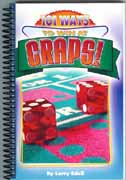
Ten major chapters (plus a glossary, resources page and index) cover the entire range of craps play. Each chapter is divided into ten sections. For example, the Pass and Come Methods includes information on how to make odds-only bets; betting before the come out; making money with place bets; pushing the house; making money with come bets; protecting your pass line bet; betting don't; multiple odds table; remembering odds; making money on a cold table.
The book also includes $50 worth of free coupons.
Craps: Take The Money and Run
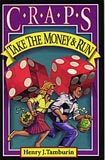
Henry Tamburin's craps book covers the basic playing rules, gaming etiquette, and the mechanics of how the game is played in casinos throughout the US. It also provides thorough explanation of all the different bets on the layout, including how to make each bet, how it wins and loses, and what the casinos edge is. Other sections cover which are the best bets on the craps table and explanation of the author's successful Increased Odds playing system that takes advantage of the high multiple odds (up to 100 times) that casinos are now offering astute players.
Bankroll Discipline for Adjustable-Odds Dice Games
The slider gives you control over variance, not over the house edge. Knowing the difference is the whole strategy.
 There are occasions when we here at ReadyBetGo want to bring you interesting facts about the gambling industry When something catches our eye, we will publish it for your enjoyment.
 Most casino games hand you a fixed set of odds and let you choose only how much to bet. Crypto dice is different: it hands you a slider that sets your own win probability on every single roll, and that control changes how bankroll strategy actually works.
ReadyBetGo has always approached casino games through the lens of strategy and discipline rather than luck, and the same mindset covered across the site's strategy guides applies cleanly to this format, even though the game itself takes seconds to learn.
What the Slider Actually Controls
On a dice btc platform, moving the win-chance slider automatically recalculates your payout using a simple formula: multiplier = (100 minus house edge) divided by win probability. With the typical 1% edge, a 50% win chance pays about 1.98x, while dropping to 10% pushes the multiplier to roughly 9.9x. The critical strategic insight is that the house edge stays identical at every point on that scale. You're never buying better or worse odds. You're only choosing how the same expected loss gets distributed: many small losses with frequent wins, or long losing stretches punctuated by bigger payouts.
Matching Slider Position to Bankroll Size
A high win-chance setting produces low variance, which means a smaller bankroll can survive far longer at, say, 90% win probability than at 10%, even though the expected loss rate per unit wagered is mathematically the same. Strategy players should treat the slider as a variance dial: the smaller your session bankroll relative to your bet size, the higher your win chance should sit if the goal is session longevity. Chasing big multipliers on a thin bankroll isn't aggressive play. It's just volunteering for the fastest possible route to ruin variance can offer.
Why Streak-Based Systems Fail Here
Every roll is determined independently by a fresh combination of server seed, client seed, and nonce, with no memory of previous outcomes. That kills every streak-based system at the root: a run of losses at 50% win chance doesn't make the next roll any more likely to win, and doubling after losses (the classic martingale) only guarantees that your average loss compounds faster when the inevitable long streak arrives. The discipline that actually transfers from other games is flat betting against a fixed session budget, not progression systems dressed up as strategy.
The Verification Habit Worth Building
Dice platforms typically run provably fair systems: the operator publishes a hash of its server seed before you bet, then reveals the seed afterward so any roll can be independently recomputed. Actually running that verification once per platform, before wagering meaningful funds, is a five-minute habit that separates players who confirmed the math from players who took a marketing page's word for it. A platform that makes verification hard to find, or explains it vaguely, is telling you something worth hearing.
Setting Stop Points Before the First Roll
Because dice rounds resolve in seconds, session pacing gets away from players faster than in any table game. The practical countermeasure is deciding two numbers before the first roll: a loss limit that ends the session and a win target that does the same. Neither number changes the math of any individual roll, but both change the only variable you fully control, which is how long you keep exposing your bankroll to a negative-expectation game. Fast games punish improvised discipline more than slow ones do.
Comparing Platforms on the Numbers That Matter
Not every dice site runs the same house edge, even if 1% is the common figure. Before settling on a platform, compare the declared edge, confirm the provably fair tooling actually works, and check that the win-chance range is wide enough for the variance profile you want to play. Those three checks matter more than interface polish or bonus headlines, and they take less time than reading a single promotional review.
Final Thoughts
The slider controls variance, never the edge, and every sound strategy for this format flows from that single fact. Flat betting against pre-committed limits will outlast any progression system, because the game has no memory for a system to exploit. Verify the fairness tooling once per platform before real funds go in. It's the cheapest due diligence in gambling.
Please gamble responsibly.