
Life: The Odds
Culture Prediction Market Apps and Platforms to Know in 2026
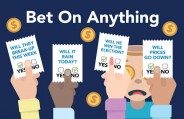
Awards season used to end with an argument in a group chat. Now it ends with a settled contract and a number that was moving for months beforehand.
 There are occasions when we here at ReadyBetGo want to bring you interesting facts about the gambling industry When something catches our eye, we will publish it for your enjoyment.
 Culture markets have become one of the busiest corners of the prediction market world, covering award ceremonies, streaming charts, video game releases, reality competition finales and annual person of the year honors. This guide explains how those contracts work and walks through the platforms listing them.
Key Takeaways
- A culture contract is a yes or no position on a stated entertainment or celebrity outcome that settles at a fixed value once the result is public.
- Unlike a sports contract, it settles against whatever resolution source the market page names, so that page is worth reading before you take a position.
- Prices move on nomination announcements, guild results, chart weeks and release dates rather than on a scoreboard.
- Platforms differ mainly on how their culture hub is organized, how far coverage extends past the headline ceremonies and how clearly settlement rules are documented.
What Is a Culture Prediction Market?
A culture prediction market is a venue where users trade contracts tied to a specific entertainment or cultural outcome. The question is written plainly, such as which series takes a given award category, which track finishes the year at the top of a streaming chart or who a magazine names as its person of the year.
Each contract resolves to one of two values once the outcome is public. A correct position settles at full value, an incorrect one settles at zero.
The category has widened well past awards. Video game releases, streaming rankings, reality competition winners and long-dated film questions now sit alongside the ceremonies that started it, and how a platform organizes all of that on screen has become part of the product. That is the same shift toward interface design running across online entertainment platforms generally.
What Culture Contracts Actually Settle Against
This is the part that separates culture from sports. A sports contract settles on a scoreboard, which is about as unambiguous as a result gets.
A culture contract settles on whatever the market page names as its resolution source. That might be an academy announcement, a chart provider's published year-end list or an official publisher statement, and those sources have their own rules about ties, reclassifications and late category changes.
Prices move on the same rhythm as the story. Nomination announcements, guild results, a surprise release date and a chart week can all shift a contract before the ceremony, and positions can usually be closed at the live price rather than held to settlement.
How This List Was Put Together
Every platform below was checked against its own live category pages and public disclosures rather than aggregator write-ups. Where sources disagreed on a detail, that detail was left out.
Three things were weighed. First, whether the platform runs a genuine culture hub rather than a handful of awards markets bolted onto a sports board. Second, how far coverage extends beyond the two or three ceremonies everyone lists. Third, how clearly the platform documents its regulatory structure and settlement rules.
Live market counts were deliberately excluded. Those numbers change day to day on every platform checked, and a figure quoted here would be out of date by the time you read it.
Culture Prediction Market Platforms at a Glance
|
Platform |
Culture hub structure |
Coverage beyond awards |
|
Fanatics Markets |
Four named sections: Emmys, Spotify, Video Games and Other |
Streaming charts, video game awards, annual honors, reality competition, long-dated film markets |
|
Kalshi |
Culture sits as its own category alongside politics and economics |
Chart positions, critic scores, streaming rankings |
|
Polymarket |
Culture catalogue covering awards, film, music and celebrities |
Box office, creator metrics, fast-moving news markets |
|
FanDuel Predicts |
Entertainment and novelty contracts |
Cultural events alongside financial and sports contracts |
|
Robinhood Prediction Markets |
Event contracts inside a brokerage app |
Narrower culture coverage than a dedicated hub |
1. Fanatics Markets
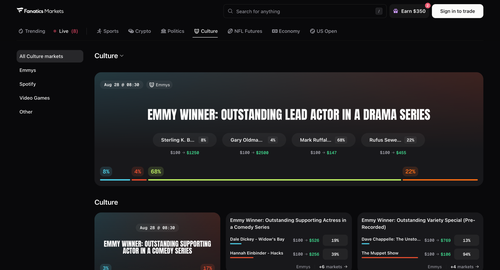
Fanatics Markets organizes its culture hub into four named sections rather than one undifferentiated feed: Emmys, Spotify, Video Games and Other. The live board runs Top Song on Spotify for the year, a video game of the year market, TIME's Person of the Year, a Dancing With The Stars season winner market and a long-dated Oscars Best Picture market for 2027, each carrying additional markets attached to the same question. For anyone comparing celebrity and culture prediction markets across venues, that named-section structure is the practical difference.
Each outcome shows an implied probability alongside a payout reference based on a fixed position size, with combo orders priced through a Request for Quote process transmitted to liquidity providers. Morton St. Trading Investments, LLC, doing business as Fanatics Markets, is a CFTC-registered futures commission merchant and NFA member, with contracts offered through Crypto.com | Derivatives North America.
2. Kalshi
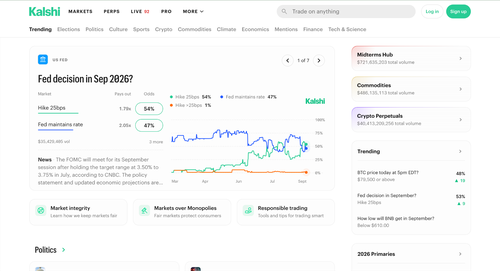
Kalshi is a CFTC-regulated event contract exchange that carries culture as its own top-level category, sitting alongside politics, economics and its other market groups. Its entertainment questions run from award ceremonies through to chart positions and critic score markets.
Because the culture category sits inside a general-purpose exchange rather than a sports app, the questions tend to be framed the same way as its political and economic contracts. That consistency helps if you trade across more than one vertical.
3. Polymarket
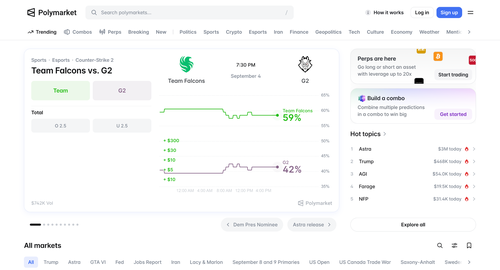
Polymarket runs a large culture catalogue covering awards, film, music, celebrities and art, with new markets appearing quickly after a cultural story breaks. Prices are presented as implied probabilities, with positions able to be bought, sold or adjusted while a market remains open.
Its global catalogue and its US offering are not the same product, so check what is available to you before assuming a market is reachable.
4. FanDuel Predicts
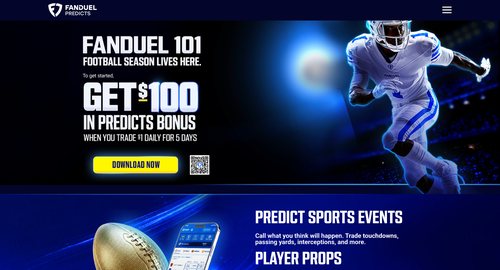
FanDuel Predicts lists culture within its entertainment and novelty grouping, alongside financial benchmarks and economic indicators.
Its exchange arrangement has shifted since launch, so the routing for entertainment contracts and for financial derivatives is worth checking separately rather than assumed to be the same.
5. Robinhood Prediction Markets
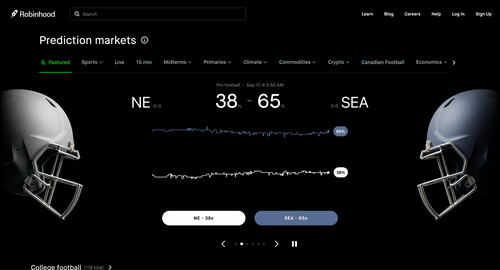
Robinhood added event contracts to its brokerage app and has expanded the category since. For existing users, the draw is keeping contracts in the same account as other holdings.
Its infrastructure has changed as the category matured, moving from partner exchange routing toward its own arrangements, so confirm the current structure on the app before opening a position.
What to Compare Before You Choose
Four things separate these platforms in practice.
Hub structure. A culture section split into named subcategories is easier to navigate than a single entertainment feed, particularly during awards season when dozens of categories go live in the same week.
Coverage depth. Check whether a platform lists every category at a ceremony or only the headline ones. That gap is where most of the difference sits.
Settlement source. Open a market page and read what it resolves against before you take a position. Culture is where this matters most.
Exit mechanics. Confirm how positions are sold before resolution and what that costs, since long-dated awards markets can run for the better part of a year.
Understanding the Risks
Event contract trading involves a real risk of loss and is not appropriate for everyone. Culture markets can look deceptively familiar because the subject is familiar, and a position that seemed obvious in January can be worthless by ceremony night.
Live data shown inside these apps is generally provided as is, for information and entertainment only, and can be delayed or incorrect. Past results are not necessarily an indication of future outcomes, and platforms say so directly in their own disclosures.
Most platforms publish risk management tools including funding limits, trading breaks and self-exclusion options. The same principle applies here as anywhere else online, where setting spending boundaries in advance is easier than working them out midway through.
Final Thoughts
Culture has gone from a novelty section to a properly built category, and the platforms above have taken different routes to it. Some lead with awards depth, others with catalogue breadth, and a few with the convenience of an account you already hold.
The right fit depends on what you actually follow. Read each platform's current disclosures, check the resolution source before you trade, and treat the price on screen as a live opinion rather than a settled fact.
Frequently Asked Questions
What is a culture event contract? It is a yes or no position on a stated entertainment or celebrity outcome that settles at a fixed value once the result is officially announced.
How do culture market prices relate to probability? A contract price reads as the market's implied probability, so a contract trading at 30 cents on the dollar reflects a roughly 30 percent implied chance.
What do awards contracts settle against? Whatever resolution source the market page names, which is usually the official announcement from the awarding body rather than press reporting.
Can you sell a culture contract before the ceremony? On most platforms yes, provided there is a live bid, and you receive whatever the market is paying at that moment.
Which culture markets are most commonly listed? Award category winners, streaming and chart rankings, video game awards, reality competition winners, annual person of the year honors and box office questions.